Scott White, CEO and Co-Founder
The Data Reveals a Counterintuitive Truth
After analyzing hundreds of franchise brands over the past 30+ years, a remarkable pattern emerges: franchisors experiencing explosive growth in qualified leads and franchise sales aren’t necessarily the ones spending the most money on advertising. They’re the ones operating with a unified marketing approach, where every channel and discipline is aligned and working toward the same growth goals.
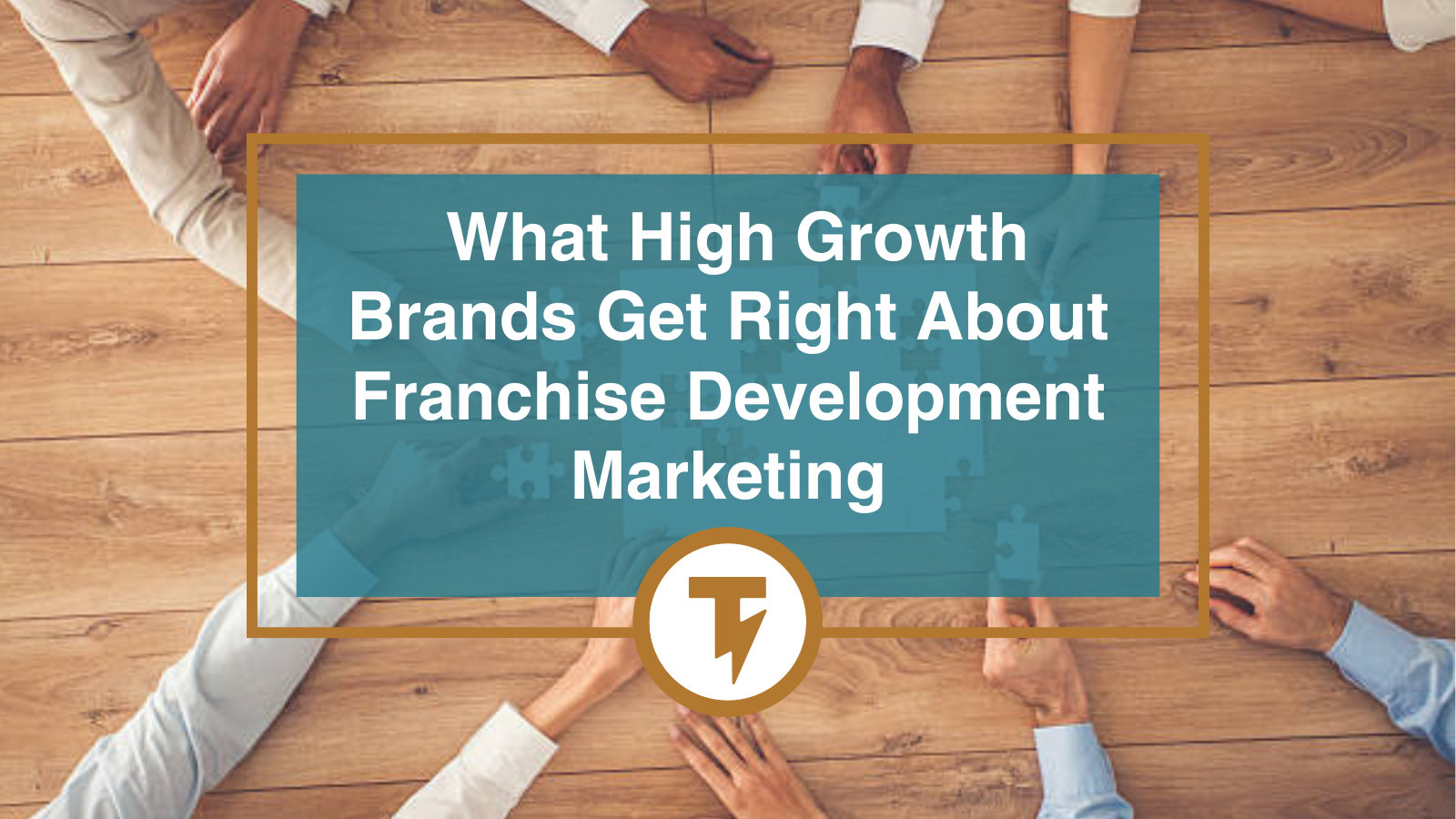
Think of your marketing like a puzzle. When each team works on a single piece without seeing the full picture, progress is slow and disjointed. Success comes faster with one team aligned around one strategy and shared goal.
This is now especially true in the rapidly emerging era of AI generated, no-click search.
The Siloed Marketing Problem
Many franchisors work with multiple agencies, each hired to handle a specific piece of the marketing puzzle.
One agency manages paid advertising, running Google and Facebook campaigns while optimizing for cost per lead and other key metrics without considering message alignment.
A separate content marketing agency cranks out blog posts and social media content, focused on SEO rankings and engagement metrics in isolation.
A PR firm pitches journalists and secures placements without talking to either of the other agencies, celebrating media hits without measuring their impact on the sales pipeline.
This multi-agency approach seems logical on the surface. Franchisors reason that specialists should handle specialized work: hire the best advertising agency, the best social media agency, and the best PR firm.
But what sounds like a recipe for excellence becomes a coordination nightmare. Each agency often reports to different people within the organization, operates on different timelines, measures success by different metrics, and has little visibility into what the others are doing.
Consider what happens in this multi-agency environment:
- A prospect sees a paid ad created by Agency A, highlighting the brand’s technology platform and low startup costs.
- They click through to a landing page that Agency B recently updated, emphasizing family values and community impact.
- They then read a blog post from Agency C focused on multi-unit opportunities.
- Finally, they encounter a PR article placed by Agency D featuring an owner-operator who works 60 hours a week in their location.
The end result is fragmented messaging that confuses your prospects rather than convincing them, eroding trust before your franchise sales consultant ever picks up the phone.
And when it comes to AI search, the story is even worse. AI algorithms are constantly looking for the most current and authoritative brands in a given industry. If your brand messaging across the various platforms is not closely aligned, you risk being completely ignored by the LLMs during a potential prospect’s search.
Meanwhile, everyone is working hard. Everyone has good intentions. Everyone has their own dashboards showing success by their individual metrics. The ad agency shows decreasing cost per click, the content agency demonstrates improved search rankings, the PR firm presents an impressive list of media placements. But they’re all rowing in different directions, and the boat is going in circles.
In this scenario the coordination burden then falls entirely on the franchisor, who becomes less of a strategic marketing leader and more of a traffic controller trying to prevent collisions between agencies who don’t communicate with each other.
This ultimately leads to finger-pointing when results don’t meet expectations, with each agency blaming the others for lack of integration. In addition, these duplicated efforts are wasting your budget and resources.
What Amplified Integrated Marketing Actually Means
The only way to maintain control of your brand messaging across modern search engines and social platforms is with a highly structured, cohesive, and adaptable messaging regiment. Your ads, videos, podcasts, social posts, blogs, web copy, and every other aspect of your marketing strategy needs to be united in their messaging and ready to adapt and align with developments in your industry.
This is what our Amplified Integrated Marketing (AIM) Model delivers.
The AIM Model is our response to the rapidly changing world of Fran Dev marketing. It’s not just about making sure everyone uses the same logo and brand colors, or that all teams follow brand guidelines. That’s table stakes. With the rise of AI and LLMs, the old model of franchise lead generation and SEO doesn’t cut it anymore.
It’s about creating a synchronized ecosystem where every marketing effort amplifies the others, creating the structure and integration needed to reach your prospects when, where and how they want to be reached.
Here’s what true amplification looks like in practice:
- A PR team secures a magazine feature highlighting your brand’s innovative business model.
- The content team immediately creates supporting blog content exploring that innovation in greater depth, producing video interviews with franchisees who exemplify that model, and developing infographics breaking down the key differentiators.
- The podcast team produces an episode with your CEO, who dives deeper into the topic, inviting listener questions and featuring franchisee perspectives.
- Paid media teams create targeted campaigns for audiences interested in that subject matter, using quotes pulled from the article to establish credibility.
- Email campaigns reference the magazine article to build trust, linking to the supporting content for prospects who want to learn more.
- The sales team is briefed on the coverage and equipped with talking points that align with the narrative.
When franchise development advertising drives traffic to landing pages featuring compelling video testimonials from successful franchisees discussing their ROI and lifestyle benefits, and those videos align perfectly with the messaging in organic social content, which is reinforced by the thought leadership executives are sharing on industry podcasts and in earned media placements, and all of it feeds into a sophisticated nurture campaign with video content that systematically addresses common objections at each stage of the decision journey, that’s Amplification. That’s Integration. That’s effective Marketing.
The result is a system that replaces guesswork with intelligence. Lower cost per lead. Higher confidence in your pipeline. And sales teams that finally trust the leads they’re handed.
The Pillars Working in Harmony
When your franchise marketing strategy works in harmony, the prospective franchisee encounters the same core messages, delivered through different formats and from different sources, creating a drumbeat of consistency that builds trust far more effectively than any single touchpoint could achieve.
Here’s how it works.
Franchise Development Advertising
Paid efforts should do more than generate clicks. They should introduce prospects to a brand narrative that they’ll encounter consistently across every other touchpoint.
When advertising teams coordinate with content and PR, they can leverage earned media credibility, support organic content themes, and create remarketing sequences that feel like a natural continuation of the conversation rather than random interruptions.
Video and Podcast Content
Video and podcast content have become the cornerstone of effective franchise development marketing, and for good reason.
Prospective franchisees want to see and hear from real people — current franchisees, executives, and brand representatives — before making an investment.
The winning brands aren’t just creating video and podcast content in isolation. They’re integrating it strategically across every channel.
For example, a single podcast interview with a successful franchisee becomes a video clip for social media advertising, quotes for PR pitches, blog post content, email campaign assets, and sales enablement tools for development representatives. Your franchise’s story, told authentically in your own voice, amplifies across dozens of touchpoints.
Written Content Marketing
Written content isn’t just a blog post created to improve SEO or be discovered by LLMs.
Strategic content supports every other marketing effort. It gives PR teams proof points and data to pitch. It provides educational resources that nurture the leads advertising brings in and offers show notes and transcripts for podcast episodes that improve discoverability. It establishes the thought leadership that makes a brand credible.
When content marketing operates in isolation, the result is content for content’s sake. When it’s integrated, every piece serves multiple strategic purposes.
Public Relations
Earned media placements are incredibly valuable, especially when it comes to AI search. Their impact significantly multiplies, however, when the rest of the marketing ecosystem is ready to capitalize on them.
A feature in a major publication should trigger coordinated content, video content repurposing that coverage, podcast episodes expanding on the topics discussed, paid amplification of that coverage, sales enablement for the development team, and integration into email nurture sequences.
One placement can generate returns for months when properly integrated.
Lead Nurture and Sales Enablement
Your franchise development team represents the final, critical piece.
When armed with insights about what content prospects engaged with, what videos they watched, which podcast episodes they listened to, what ads they clicked, and what media coverage they might have seen, development representatives can have much more relevant conversations.
When there’s alignment between what marketing promises and what sales delivers, conversion rates soar.
Making the Shift
The brands winning at franchise development marketing right now have made organizational changes to enable this integration. This isn’t just about better communication or quarterly alignment meetings. It requires structural changes:
Breaking Down Departmental Silos: Instead of separate teams reporting to different leaders with different goals, successful brands create cross-functional teams with shared accountability. Marketing, PR, and sales leadership meet regularly to coordinate campaigns, share insights, and solve problems together.
Implementing Shared Goals and Metrics: Everyone shares responsibility for franchise development goals, not just their individual channel metrics.
Creating Regular Collaboration Touchpoints: Integration happens through systematic coordination. Successful brands establish regular touchpoints where advertising, content, PR, and sales alignment happens as a matter of course: weekly content planning meetings, monthly campaign reviews, quarterly strategy sessions.
Developing Integrated Campaign Frameworks: Rather than launching separate initiatives, integrated brands plan campaigns from the start with all channels considered. A new initiative is a coordinated effort with defined roles for every team.
Most importantly, they’ve recognized that amplified integrated marketing isn’t a tactic or a campaign that runs for a quarter and then gets replaced with the next initiative. It’s a strategic approach that fundamentally changes how marketing drives franchise growth, requiring sustained commitment from leadership and buy-in across the organization.
Do It Thunderly
Want to work with a franchise marketing agency that knows how to fully unleash the power of integrated marketing? Contact us today to discuss how our Amplified Integrated Marketing (AIM) Model can transform your franchise growth.
Follow us on LinkedIn and sign up for our newsletter to keep up with our latest blogs.
© 2026 Thunderly Marketing. All rights reserved.